|
 Vietnam's
diverse natural environment, geography, history, and culture have
created a great potential for the tourism industry. Vietnam's
environment includes long coastlines, forests, and mountainous areas
with beautiful caves. As well, Vietnam has a history and culture of
ancient architectures, religions and cults, and traditional festivals. Vietnam's
diverse natural environment, geography, history, and culture have
created a great potential for the tourism industry. Vietnam's
environment includes long coastlines, forests, and mountainous areas
with beautiful caves. As well, Vietnam has a history and culture of
ancient architectures, religions and cults, and traditional festivals.
Vietnam
has a long coastline that extends along the eastern boundary of the
country and wraps around the southern tip for 3,260 km, a distance
geographically longer than the length of the country. Traveling from
north to south or from south to north, tourists will find many beautiful
beaches where, all year round, they can stay and enjoy the excitement
of the seaside. There are more than 20 beautiful beaches along the
coastline, such as Tra Co, Halong,
Do Son, and Sam Son in the north and
China Beach (Da Nang), Nha Trang,
Vung Tau, and Ha Tien in the south. In
particular, tourists can visit Halong Bay, which is a world natural
heritage site, a creation of Mother Nature, with thousands of islands
and rocks of different sizes and shapes, such as a dragon, a frog, a
turtle, and a fighting chicken. Inside the big islands, there are huge
and wonderful caves and grottoes.
Vietnam is a tropical country in
the northern hemisphere. With its geographical diversity, the country
has inherited many famous natural resorts such as Sapa , Tam Dao, Bach
Ma, and Da Lat. These resorts are usually located 1,000 meters above sea
level; therefore, they have climates that are similar to those of the
temperate zones.
Dalat City is not only an ideal tourist resort,
but it is also a city of pine forests, waterfalls and many kinds of
beautiful flowers. Coming to Da Lat, tourists are diverted by the strong
and tender melodies of the T'rung and Gong, two typical musical
instruments of the highlanders commonly played at evening parties.
Vietnam
has many famous national parks, which are great collections of precious
plant and animal species of the tropical zone. The most famous national
forests include Cuc Phuong in Ninh Binh province, Cat Ba on
Cat Ba Island, Con Dao on Con Dao Island, etc. There are several regions in
Vietnam that have been reserved as gardens and bird sanctuaries. At Minh
Hai Sanctuary, there are more than 80 species of birds. At Tam Nong
Sanctuary, there is a garden conservatory for redhead cranes,
established as an information center for cranes funded by the
International Fund for Bird Protection in Bergheim, Germany.
Vietnam
has abundant mineral water sources found throughout the country, such
as Quang Hanh hot stream in Quang Ninh province, Hoi Van mineral spring
in Binh Dinh province, Vinh Hao mineral spring in Binh Thuan province,
Duc My stream in Nha Trang, and Kim Boi mineral spring in Hoa Binh
province. These areas have become resorts for health rehabilitation and
relaxation attracting numerous visitors every year.
Vietnam has a
long 4,000-year history, over which many valuable architectural
heritages of rich oriental culture have been built. Many of these
vestiges maintain their ancient appearances, such as the One Pillar
Pagoda and Kim Kien Pagoda in Hanoi, Pho Minh Tower in Nam Ha province,
Binh Son Tower in Vinh Phuc province, Tay Dang Temple, Chu Quyen Temple
and Tay Phuong Pagoda in Ha Tay province, Keo Pagoda in Thai Binh
province, and But Thap Pagoda and Dinh Bang Temple in Bac Ninh province.
In the villages of the Central Coast of Vietnam, Cham Towers are the
remarkable vestiges of this lost civilization. In particular, the royal
architectures of Hue Ancient Citadel were recognized as a World Cultural
Heritage Site by UNESCO.
Ha Long Bay
 Halong
Bay lies in the middle of the coastal area of Quang Ninh province, 180
km east of Ha Noi. It is the edge of the Asian Continent, which has been
dipped into the ocean with the deepest point of less than 200 metres.
The water surface of the Bay is 1500 square km large with thousand of
rocky islets and caves arranged by the miraculous hands of Nature. Halong
Bay lies in the middle of the coastal area of Quang Ninh province, 180
km east of Ha Noi. It is the edge of the Asian Continent, which has been
dipped into the ocean with the deepest point of less than 200 metres.
The water surface of the Bay is 1500 square km large with thousand of
rocky islets and caves arranged by the miraculous hands of Nature.
"The
World's Wonders" (les Merveiller du Monde) published by the Hachette in
Paris in 1950 regards Vietnam's Halong Bay one of the world's wonders.
Boats
are always available to help tourists with Bay sightseeing. By passing
numerous islets, each with different shape of animal you will enjoy a
feeling of entering a world of fossil animals millions of years old.
Halong has 1000 named islets (the number of islets unnamed has not been
determined yet). Such names as the Dragon, Monkey, Toad, Turtle,
Fighting Cock, Pot and Cup... . are called after their shapes. You can
visit the Bay within one day, or it is possible to spend the whole month
sailing and exploring hidden mysteries of every single cave.
Sapa

Sapa
is a holiday-resort town lying at the altitude of 1600 metres. Built in
1922, Sapa is 38 km from the provincial town of Lao Cai. Its climate is
moderate with average temperatures from 18oC to 23oC degrees. There are
a lot of rains from May to August. In winter, it is often foggy and
cold with tempetatures below freezing point and occasional snowfall.
In
summer, Sapa is an ideal holiday resort. Around the town are gardens of
temperate vegetables such as cabbage, kohlrabi, chayote... of precious
medicinal plants and of fruit trees like peach, plum, pear, ...
Two
kilometres away from the town are the Silvery Fall and Cane Bridge. The
bridge over the Muong Hoa River is made of cane. It is extremely
interesting to venture on it for the first time.
The Hoang Lien Son Mountain range lies 9 kilometres away from Sapa, with its highest peak, Fansipan, of 3143 metres.
Sam Son Beach
Sam
Son Beach is 16 km from the city of Thanh Hoa. This is a wonderful
seaside resort which the French began exploiting in 1906. It soon became
a famous spot of the then-Indochine. A number of decades ago, many
holiday villas were sonstructed here. Sam Son has a lot of beauty spot
such as : the "Trong Mai" Mountain, the "Doc Cuoc" Temple, and "Co Tien"
Moutain...
Bich Dong (Blue Cave)
Bich Dong is situated at
the Dam hamlet, Minh Hai commune, Hoa Lu district, Ninh Binh province. A
small boat will take visitors in a winding voyage around the mystic
caves. In the 18th century, on a trip to Bich Dong, King Tu Duc, stunned
by the great beauty of the rivers, mountains, caves and pagodas
nestling on mountain sides, awarded the place with the title "The Second
Best Cave" under the Southern Heaven.
Cuc Phuong national park
 Cuc
Phuong is 100 km southwest of Hanoi. It lies at the border of 3
provinces of Ninh Binh, Hoa Binh and Thanh Hoa, and is 60 km from the
sea. The forest is 25000 ha in area, of which one-third is limestone
mountains from 300 to 600 metres high against the sea level. Cuc
Phuong is 100 km southwest of Hanoi. It lies at the border of 3
provinces of Ninh Binh, Hoa Binh and Thanh Hoa, and is 60 km from the
sea. The forest is 25000 ha in area, of which one-third is limestone
mountains from 300 to 600 metres high against the sea level.
The
virgin forest was discovered in 1960 and hac been recognised as a
national park. It has Dan Dan grotto, Ancient Men cave, hot springs with
a temperature of 38 Celsius degrees, barashrea -htellata,
dracontomelum... of nearly 1000 years old and from 50 to 70 metres high.
Cuc Phuong has up to 2000 species of plants. Orchid alone has 50
species, some giving flowers and sweet smell all year round. Cuc Phuong
has 262 species of vertebrates and many precious birds and animals such
as: bear, horse, wild pig, tiger, panther, weasel, squirrel, monkey,
ect. There are semi nature reserves with deer, samba deer, yellow
monkey, underpants parrot, flying squirrel, flying lizard, etc... . Cuc
Phuong is also home to hundreds of rare birds.
The Ancient Town of Hoi An
The
Ancient Town of Hoi An -an old-time commercial port- was built between
the 8th and 17th centuries. About 80% the residential structures of the
town still remain intact. The infrastructure system - roads, lanes,
bridges - still exists. Hoi An is a valuable and special tourist
attraction both in Vietnam and in Southeast Asia. Hoi An looks like a
traditional painting. Its houses are so close to each other. Their roofs
are of uneven heights and moss-green. The town's residential houses are
small, they look like toys made of baked clay and attached to the
rock-garden. Its scenery bears a false and true feature of old
paintings.
Hue - the ancient royal
Hue has more than one
thousand years of history. When Hue was the capital of Vietnam
(1802-1945), hundreds of valuable cultural architectures were
constructed by the Nguyen Dynasty. Many relics of the former capital
still lay their shadow over the Huong (Perfume) River. As time goes by,
some of the city's relics have been destroyed and abandoned. However,
because of its historical values, Hue has been recognised by UNESCO as a
cultural heritage of the world. |


.jpg) Thời gian di chuyển từ đất liền sang đảo sẽ trôi qua rất nhanh, nhưng
những cảm xúc yên bình sẽ còn lắng đọng mãi. Tất cả được cất giấu tận
sâu trong tâm hồn, nhường chỗ cho những cảm xúc ngỡ ngàng, ngạc nhiên
khi bạn đứng trước khu công viên giải trí đồ sộ Vinpearland. Có rất
nhiều trò chơi, thú vui để bạn và người thân cùng nhau khám phá, nhưng
để chắc chắn rằng bạn sẽ không bỏ lỡ bất kỳ một cuộc vui nào, hãy nhanh
chóng nhập cuộc.
Thời gian di chuyển từ đất liền sang đảo sẽ trôi qua rất nhanh, nhưng
những cảm xúc yên bình sẽ còn lắng đọng mãi. Tất cả được cất giấu tận
sâu trong tâm hồn, nhường chỗ cho những cảm xúc ngỡ ngàng, ngạc nhiên
khi bạn đứng trước khu công viên giải trí đồ sộ Vinpearland. Có rất
nhiều trò chơi, thú vui để bạn và người thân cùng nhau khám phá, nhưng
để chắc chắn rằng bạn sẽ không bỏ lỡ bất kỳ một cuộc vui nào, hãy nhanh
chóng nhập cuộc.
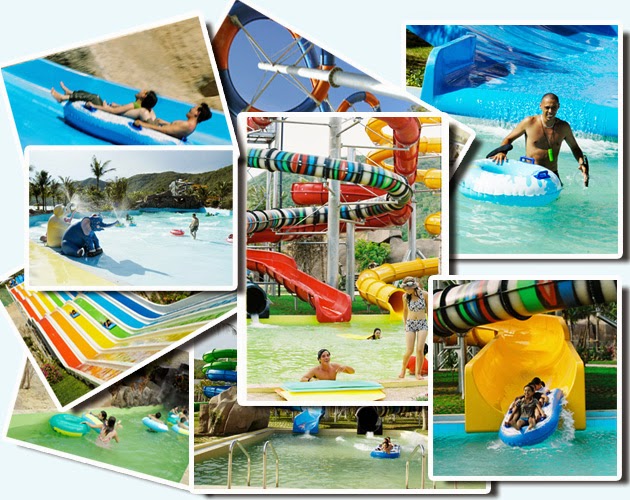 Công viên nước rộng lớn với rất nhiều máng trượt và trò chơi hấp dẫn;
thủy cung Vinpearl với gần 300 loài sinh vật biển quý hiếm và 90m đường
ngầm dưới nước; khu trò chơi trong nhà, khu trò chơi ngoài trời với vô
vàn trò chơi lý thú; sân khấu nhạc nước và biểu diễn ngoài trời với sức
chứa hơn 5.000 chỗ ngồi; trung tâm hội nghị và biểu diễn đa năng có sức
chứa 1.350 khách;… tất cả luôn sẵn sàng để bạn khám phá. Bạn hãy tranh
thủ tận hưởng cảm giác thư giãn, sảng khoái trước khi trở về với không
gian riêng tư và ấm cúng tại một trong những phòng nghỉ cao cấp của
khách sạn 5 sao Vinpearl Resort Nha Trang.
Công viên nước rộng lớn với rất nhiều máng trượt và trò chơi hấp dẫn;
thủy cung Vinpearl với gần 300 loài sinh vật biển quý hiếm và 90m đường
ngầm dưới nước; khu trò chơi trong nhà, khu trò chơi ngoài trời với vô
vàn trò chơi lý thú; sân khấu nhạc nước và biểu diễn ngoài trời với sức
chứa hơn 5.000 chỗ ngồi; trung tâm hội nghị và biểu diễn đa năng có sức
chứa 1.350 khách;… tất cả luôn sẵn sàng để bạn khám phá. Bạn hãy tranh
thủ tận hưởng cảm giác thư giãn, sảng khoái trước khi trở về với không
gian riêng tư và ấm cúng tại một trong những phòng nghỉ cao cấp của
khách sạn 5 sao Vinpearl Resort Nha Trang.


+(1).jpg)


